
Years from now, you may forget the flowers or the food. But the song playing during your first dance? That can stay with you forever.
The music can stay with your guests, too. Getting it right for the whole celebration means thinking beyond your favorite songs.
At a Jewish wedding, the music has to be timed around moments like the breaking of the glass. It also needs to bring together guests with different tastes: your grandparents may want Israeli classics, while your friends want new hits. Lean too heavily on either style, and some guests might spend more time sitting than dancing.
Personalized music planning makes room for the traditions without losing sight of the dance floor. If you’re considering Levyticus for your Jewish wedding, here are five things to talk through with your DJ:
- Which moments need their own music
- How to blend traditional songs with modern hits
- Where live musicians and lighting fit
- What to agree on with your DJ before the wedding
- How the DJ adjusts the plan during the wedding
What is personalized music planning for a Jewish wedding?
Personalized music planning means choosing music that reflects your tastes and family traditions instead of relying on a DJ’s default set. Some songs mark key moments, while others keep your guests dancing. Even with a plan in place, your DJ can adjust the dance sets as the night unfolds.
At Levyticus, planning starts with an in-depth conversation before the wedding day. You can talk through the songs that matter to your family, including any favorites for the hora (the Jewish circle dance), instead of relying on a standard medley. What you share then helps shape the music throughout the celebration, from guest arrival to the last dance.
Which wedding moments require personalized music selection?
During cocktail hour, guests need to be able to talk, while the hora calls for music that gets everyone dancing. The table below shows what music needs to do at seven parts of the wedding, along with the Levyticus options to discuss for each.
| Moment | What the music does | Levyticus options |
| Guest arrival and cocktail hour | Sets a welcoming mood without overpowering conversation | Sound coverage for each part of the wedding |
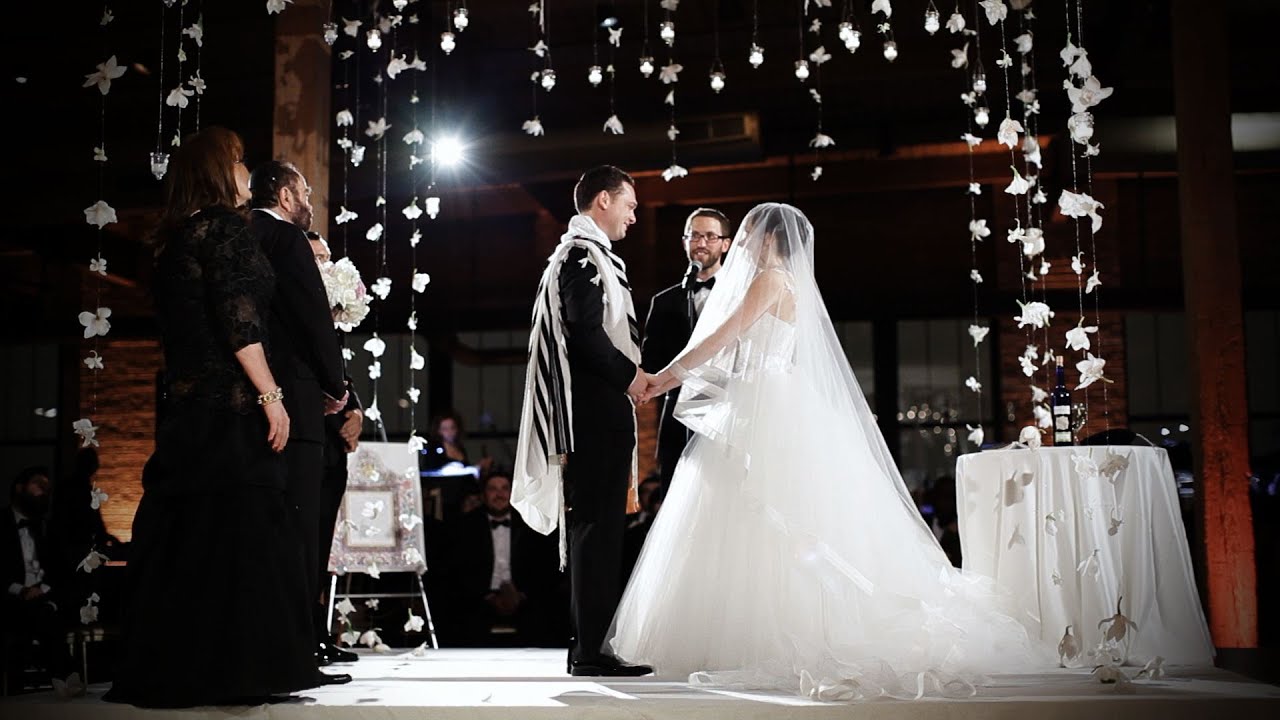
| Ceremony and processional | Accompanies each walk to the chuppah (wedding canopy), with a celebratory song after the glass breaks | Walking-Down-The-Aisle and Chuppah-Essentials playlists |
| Couple’s grand entrance | Creates an energetic welcome as you walk in | An edit that starts on the song’s strongest part |
| First dance and family dances | Makes each dance personal with songs chosen by you and your family | Edits that fit the length of each dance |
| Hora and traditional celebrations | Builds energy through circle dancing and a chair lift, if included | The Traditional-Wedding-Hora playlist |
| Dinner and toasts | Plays softly enough for conversation and pauses for toasts | Wedding-Dinner-Covers playlist and speech mics |
| Open dance floor and after-party | Moves between genres as the crowd’s energy changes | Israeli party, pop, and oldies playlists, plus after-party booking |
How can couples balance traditional Jewish music and modern hits across generations?
At Jewish weddings, couples can balance traditional music and modern hits by giving each style its own sets while using custom edits to bring them together. The tricky part is deciding how much of each to play, and when. Your family may love Israeli classics, your friends may prefer newer hits, and you may want a little of both. Here are 5 ways to plan the mix.
- Give traditional music its own sets, using the Israeli, Sephardic, and Chabad wedding playlists at Levyticus as a starting point.
- Blend the two with custom edits, such as pairing a Hebrew melody with a familiar pop beat when it suits the song.
- Plan the night’s pacing around your guests, leaving room for Israeli classics, oldies, and chart-toppers as the energy changes throughout the evening.
- Mix in global hits so guests unfamiliar with traditional Jewish music have songs they recognize, too.
- Sequence songs so generations can dance together, moving from an oldie to an Israeli party song to a current hit with smooth transitions between them.
How do live musicians and lighting support your music plan?
The music plan also helps you decide where live musicians can perform and when the lighting should change. A live performance can make a ceremony song feel more personal, while lighting can reflect the shift from a quiet dinner to a lively dance floor.
Levyticus offers a live musicians package for the chuppah, dinner, and dancing. If you’re combining live musicians with a DJ, agree in advance on who handles the music between sets.
Stage lighting can change with the music, while uplighting gives the venue a consistent color theme. For moments like the grand entrance, intelligent lighting and special effects can create a more noticeable change.
Agree on the music and lighting cues for those moments beforehand, so the lights change when they’re supposed to.
What should couples discuss with their wedding DJ before finalizing the music plan?
Before you finalize the music plan, go over your song choices, religious requirements, and important cues with your DJ. Even a favorite song can feel out of place if it starts at the wrong moment. These 6 topics will help you work through the details together.
- Name the artists and songs you love, since “Israeli pop” alone may not tell your DJ exactly what you want.
- Share must-play and do-not-play lists, including the version of each song, since a cover and a remix can feel very different.
- Explain any religious guidelines that affect the music, including whether men and women will dance separately. If kol isha affects your choices, explain any restrictions on men hearing women sing, including how you handle recordings.
- Pass along family requests, like a grandparent’s favorite song or the mezinke, a dance for parents whose youngest child is getting married.
- Set the timeline and cue points, including who signals the song after the glass breaks, when the hora starts, and when to pause the music for toasts or Grace after Meals.
- Review announcements and handoffs, including Hebrew name pronunciations for the grand entrance and how live musicians will hand over to the DJ.
How does an experienced DJ adapt the music plan on the wedding day?
An experienced DJ uses the plan as a guide, then watches how guests react. When the crowd’s energy changes, the DJ can adjust the songs and tempo without losing track of the moments you’ve planned in advance.
Shimi Levy, the DJ behind Levyticus, has worked at more than 750 events, from New York to Israel and Morocco. Here are five situations a DJ might encounter during the wedding and how they could respond.
| What the DJ notices | How the DJ might respond |
| The floor thins out after dinner | Try a familiar favorite, then pick up the tempo if guests respond |
| Some guests leave during a pop set | Bring in an Israeli classic or an oldie if it suits their tastes |
| Hora energy starts to fade | Wind the medley down at a natural point, then move into familiar pop if appropriate |
| An Israeli music set starts losing momentum | An open-format DJ (one who mixes genres) can use a mashup to ease into pop |
| Guests seem unsure of the hora steps | Give brief directions over the mic, if agreed with the couple beforehand |
Plan your Jewish wedding music around what matters to you
Your wedding playlist should bring together everything that matters to you, from the traditions your family loves to the songs you and your partner can’t wait to dance to. And, of course, those crowd favorites that get everyone on their feet.
But what happens when your family wants Israeli classics and your friends are waiting for the latest hits? You don’t necessarily have to choose between the two. A DJ who understands both can help you find a balance that keeps everyone involved.
That’s the kind of balance Levyticus helps you plan. It starts with a conversation about your favorite songs, family traditions, and the atmosphere you want for your wedding. From there, the team puts together a music plan, coordinates the lighting, and adjusts what’s playing as the night unfolds.
Already have a few must-play songs in mind? Check Levyticus’s availability for your wedding date and share what you’d love to hear.
Frequently Asked Questions (FAQs)
Q1. What music is played at Jewish weddings?
Jewish wedding music can blend Hebrew classics with modern hits. “Siman Tov u’Mazal Tov” (good luck and congratulations) is a familiar choice after the glass breaks, and “Hava Nagila” is a hora favorite. Beyond those favorites, Levyticus has playlists covering Israeli, Sephardic, and pop music.
Q2. When does the hora happen at a Jewish wedding?
The hora can take place early in the reception or after dinner, depending on your schedule. The length is flexible, too. If you’re considering a 10- to 20-minute set, your DJ can help you decide what works for your guests.
Q3. What are the main parts of a Jewish wedding ceremony?
Jewish wedding ceremonies traditionally have two stages: kiddushin (betrothal) and nisuin (marriage). Beyond those stages, the wedding may include a ketubah (marriage contract) signing and, in some traditions, yichud (private time together after the ceremony). Your officiant can confirm the order of the rituals you’re including, so your DJ knows when music belongs.


