
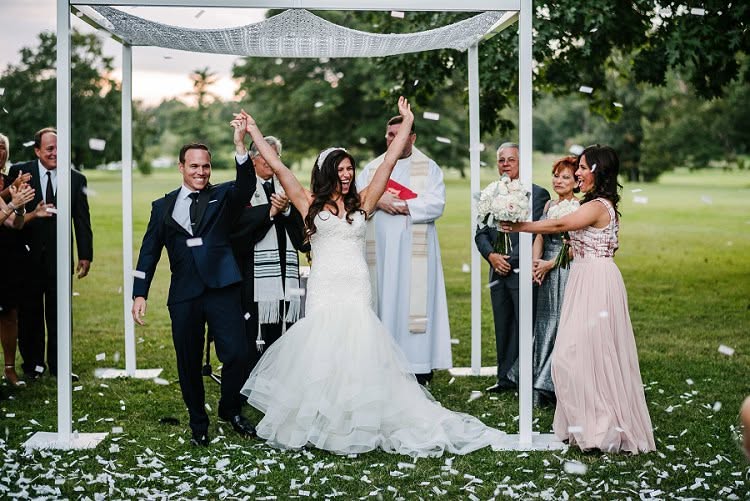
Your Jewish wedding isn’t one-size-fits-all. Why should your music be?
After all, Jewish weddings often seat cousins from Tel Aviv and college friends who came for hip-hop next to grandparents who ask about the hora before dinner.
So when the DJ sticks to one style, one group dances while everyone else checks the time. An open-format DJ fixes that by mixing traditional Jewish songs, Israeli hits and modern party tracks in one continuous set, so every table gets a turn.
That’s also how Levyticus, an open-format DJ for Jewish and Israeli weddings in New York City, plans every wedding.
If you’re still deciding on a DJ, the sections below cover how the style works, what to play, how it compares with a traditional wedding DJ and how to plan your list.
What is an open-format DJ and how does this DJ style work?
An open-format DJ, or multi-genre DJ, plays many genres in one night, choosing songs based on how the crowd responds. Moving between genres sounds easy until you have to go from a hora medley to a hip-hop track. The two can have different tempos and keys, and a careless transition can break the energy on the dance floor.
A skilled open-format DJ works around those differences, matching tempos where possible and using harmonic transitions when the keys are compatible. At Levyticus, Shimi Levy combines that mixing skill with crowd reading, choosing what to play next based on who’s dancing and how they’re responding. That flexibility matters at a Jewish wedding, where the music has to suit the chuppah, lift the energy for the hora, and keep the party going afterward.
Why does a Jewish wedding need more music variety than most weddings?
A Jewish wedding often calls for a wider mix of music because the guest list can bring together three generations, families with roots in different countries, and guests with different levels of religious observance. Jewish wedding bands have long blended Eastern European melodies with American dance music, so bringing different styles together is nothing new.
What goes into that mix depends on the family. Some Ashkenazi relatives may want klezmer, Sephardic and Mizrahi guests may request Moroccan or Middle Eastern rhythms, and Israeli relatives may hope to hear hits from home. Religious observance can influence those choices, too. Some Modern Orthodox couples might want Jewish music alongside mainstream hits with clean lyrics.
That same mix can also include familiar songs for friends who aren’t used to Jewish wedding traditions, helping them feel comfortable joining the dancing. The trick is making all those musical tastes work together without making the night feel like a separate playlist for every group.
What types of music are commonly played at Jewish weddings?
Jewish wedding playlists often bring together traditional ceremony songs, hora and folk-dance music, Israeli and Mediterranean hits, pop, hip-hop, R&B, and international favorites. During the ceremony, couples might select Hebrew classics like “Dodi Li” for the walk to the chuppah or “Od Yishama” after the glass breaks.
During the reception, the music picks up for the hora, with guests circling to “Hava Nagila” and sometimes lifting the couple on chairs. The dance set might also include Israeli folk dances like “Mayim Mayim.” Beyond those folk dances, the DJ might play Israeli favorites from artists like Omer Adam and Ishay Ribo. Open dancing can also feature Top 40, hip-hop, and R&B.
Some couples also include Latin, Russian, or Persian favorites to reflect their families’ musical tastes. Want some ideas for the Jewish and Israeli parts of your playlist? Levyticus has Jewish and Israeli wedding playlists featuring everything from chuppah songs and hora favorites to Israeli hits and popular party tracks.
How does an open-format DJ balance traditional Jewish music with modern hits?
An open-format DJ balances traditional Jewish music with modern hits by giving each its own place in the celebration and choosing songs that make the change between them feel natural. You might worry that a longer traditional set will leave some guests waiting for songs they know. That doesn’t mean you have to reduce the time spent playing traditional music just to give modern hits more time.
The DJ can give the hora its own uninterrupted medley, so guests can stay in the circle without awkward pauses. After the hora, an upbeat Israeli track with a compatible rhythm can ease the shift toward Top 40, while the crowd’s response helps the DJ decide what comes next. Once the music moves into open dancing, Shimi Levy of Levyticus can bring in his original dance edits, giving familiar songs a fresher beat while keeping the melodies guests know.
How does an open-format DJ cater to different generations of wedding guests?
An open-format DJ makes room for different generations by moving between the songs older relatives grew up with and the tracks younger guests love. That might mean Hebrew folk songs and oldies your parents danced to at their own wedding, with softer covers during dinner so everyone can talk. When the dancing picks up, current pop, hip-hop and EDM can join the mix.
The hora gives guests of different ages a chance to dance together. Another family tradition is the mezinke, a dance honoring parents whose last child is getting married. During open dancing, the DJ watches who’s on the floor and how guests respond, bringing back an older favorite when it fits the mood. The point isn’t to give each age group a separate turn, but to keep everyone part of the same party.
Is an open-format DJ or a traditional wedding DJ better for Jewish weddings?
An open-format DJ can be a strong fit for Jewish weddings where guests want everything from Israeli dance hits and Mizrahi pop to American Top 40 and wedding classics. The appeal is the freedom to move between those styles as the crowd responds, rather than following the same musical sequence regardless of who’s dancing. But genre flexibility is only part of the job. The DJ also needs to know the music for the hora and understand the other Jewish wedding traditions your family plans to include.
A traditional wedding DJ might know those traditions just as well, so the label alone won’t tell you who’s a better fit. Ask how each DJ moves between traditional and modern music, whether by mixing live, fading between full songs, or using both. You’ll also want to know who’s handling MC duties, from introducing speeches to guiding guests through the reception. At Levyticus, Shimi Levy combines Jewish and Israeli music knowledge with live mixing and MC work.
How can couples plan a personalized music experience for their Jewish wedding?
Couples can plan a personalized mix by sharing their preferred genres, must-play songs, and do-not-play list with the DJ, then deciding how those choices fit alongside family traditions and the wedding schedule. Some Jewish couples, for example, choose to avoid Wagner’s “Bridal Chorus” (“Here Comes the Bride”) because of the composer’s antisemitism. Relatives may also have particular songs they want included, especially during traditional moments like the chuppah.
Making room for those traditions doesn’t mean giving up your favorite songs. An experienced DJ can include a niggun (a wordless Hasidic melody) at the chuppah and still play your favorite tracks when the dancing begins.
Once you know which songs you want for each part of the wedding, your rabbi can confirm the ceremony cues while your planner and DJ work out the reception timing, including when the hora starts and how long it runs. Levyticus covers those details with you through his collaborative music planning process. You can also discuss bringing in live musicians for the chuppah, dinner, or dancing.
Explore the right DJ experience for your Jewish wedding
The right open-format DJ keeps the hora medley flowing without awkward gaps, moves between songs that different generations enjoy, and respects your family’s customs. Levyticus brings those skills to your wedding as a DJ, producer, and emcee, with 750+ events behind him and a Customer Satisfaction Guarantee. Send Shimi Levy your wedding date and three songs you’d hate to miss.
Frequently Asked Questions (FAQs)
Q1. Does our wedding DJ need to be Jewish, or is experience with Jewish weddings enough?
A DJ doesn’t have to be Jewish, but they should understand Jewish wedding customs, from ceremony music to the timing of the hora. Someone unfamiliar with these celebrations may need guidance from your rabbi or planner. Levyticus specializes in Jewish and Israeli weddings, so he can work with your family to incorporate the traditions that matter to you.
Q2. Can a DJ help guests who have never danced the hora participate?
Yes. An experienced emcee can call simple cues like “circle left” and ask confident dancers to lead, so guests who are new to the hora can follow along. If most guests are trying it for the first time, you can discuss a shorter hora of around 10 minutes with your DJ. As DJ and emcee, Levyticus can keep the music going while helping guests join in.
Q3. Can we request traditional versions of Jewish wedding songs instead of modern remixes?
Yes. During planning, you can tell your DJ which exact recordings you want, not just the song titles. You might choose a classic version of “Hava Nagila” for the hora, then save modern remixes for later in the night. Levyticus offers a Traditional Jewish Hora playlist alongside his own dance edits, giving you options for both.
Q4. Can we give our DJ a must-play and do-not-play list while still allowing guest requests?
Yes. Share your must-play and do-not-play lists with Levyticus, then agree on how he should handle guest requests. That way, guests can suggest songs without anything you’ve ruled out making it into the set.


