
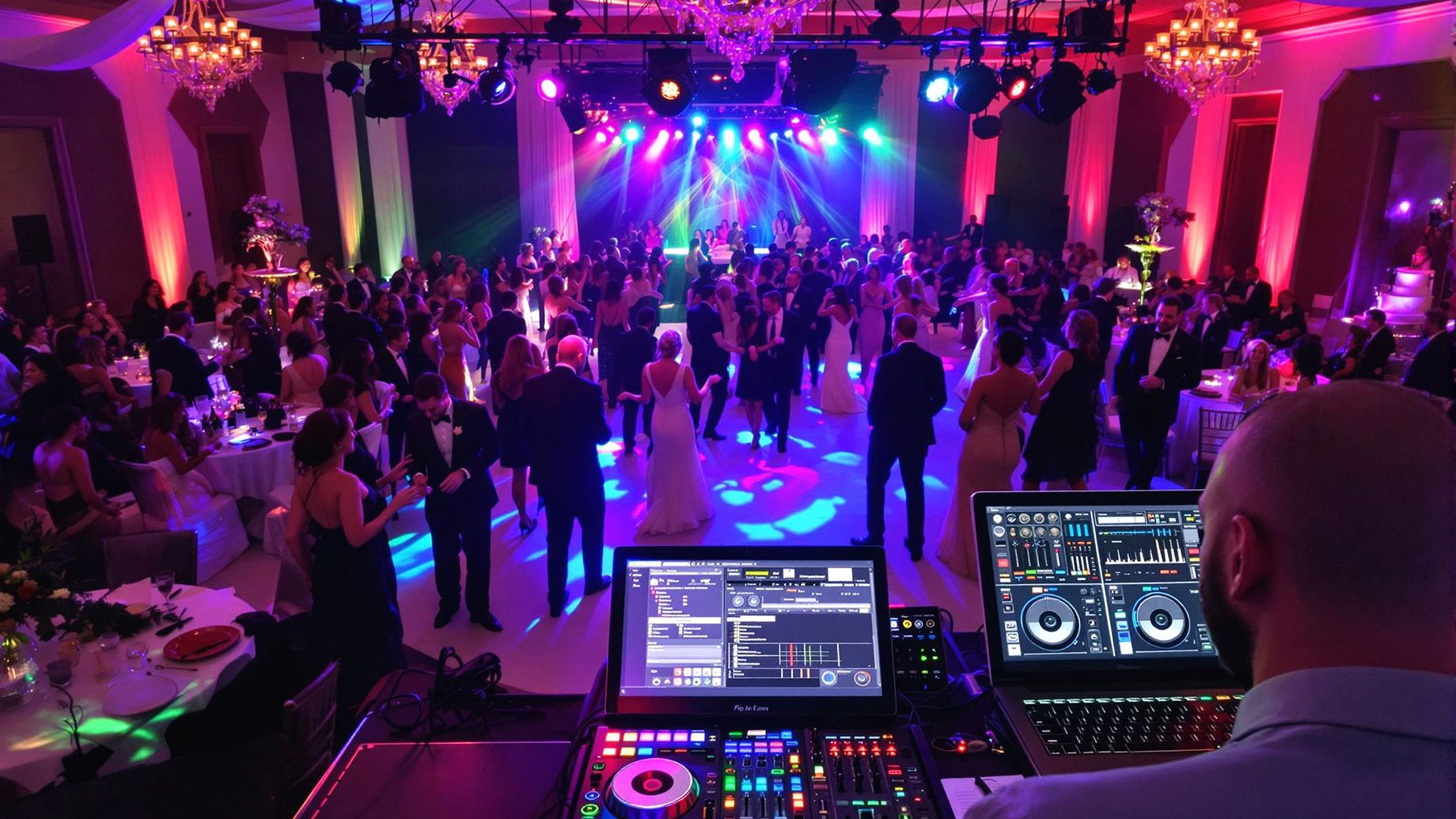
The best celebrations do not come from playing more songs; they come from creating better moments.
Those moments come from knowing when to play each song, with the DJ responding to guests instead of following a playlist from start to finish. While many hosts still believe a strong playlist defines a DJ, experienced event DJs take a different approach. They read the atmosphere and adjust the musical direction as the celebration goes on.
That is why so many luxury private events choose open-format DJing, where the music follows the guests instead of a fixed setlist.
What Is an Open-Format DJ?
An open-format DJ plays songs from several genres in one night instead of staying within a single style. They mix tracks smoothly, adjust song choices as the crowd shifts, and put guest enjoyment ahead of a fixed playlist. That flexibility means the room decides the direction of the music, not a set schedule, allowing the DJ to move from Israeli classics to a current pop record within minutes.
On different occasions, people prefer genre-specific DJs who approach the night differently, building each set around a single category like house, hip-hop, or traditional Jewish music. This approach works well for audiences with similar musical preferences; however, large celebrations rarely have that level of consistency. Because of this, an open-format DJ removes the risk by observing how guests react and shifting styles the moment their energy moves. That adaptability helps guests with different tastes find music they connect with which keeps the dance floor active throughout the night.
How Open-Format DJs Keep Dance Floors Full Longer
Open-format DJs keep the dance floor full by observing the crowd in real time, switching genres without breaking the energy, and shifting the mood before the event’s rhythm breaks down.
At luxury private events, reading a room requires constant attention so the DJ notices who dances, who steps outside, and how each song lands. Because of this, the DJ can switch between genres smoothly without interrupting the flow of the celebration. This same awareness helps the DJ slow things down when needed and build the momentum back before guests drift away.
In short, good pacing decides how long the dancing lasts.
Type of Luxury Events That Open-Format DJs Work Well In
Open-format DJing works best for celebrations with diverse guests and long events because the music adapts throughout the night. And Levyticus focuses on 4 occasions where this approach makes the biggest difference:
- Weddings: Traditional Jewish and Israeli music flows alongside modern hits across the chuppah, dinner, and the dancing that follows.
- Bar and Bat Mitzvahs: Teenagers and grandparents celebrate side by side – so the music has to satisfy both groups without losing either one.
- Luxury Private Parties: Milestone events bring different guests together, so the music needs to adapt throughout the night.
- Corporate Events: Galas and fundraisers require music that fits the program, from speeches and presentations to the final dance set.
How Open-Format DJs Personalize Every Celebration
The best events start with a plan where the DJ builds the music around your vision from the beginning. This process starts with 4 steps:
- Discussing must-play songs, family traditions, and the tracks you prefer to skip.
- Building a separate music plan for every part of the celebration.
- Adjusting the set live as your guests respond.
- Making Every Celebration Feel Unique
6 Signs You Should Book an Open-Format DJ for Your Event
Some celebrations work well with a single-genre DJ, but most modern guest lists need more musical range. These 6 signs show when an open-format DJ is the better fit:
- A diverse guest list: Guests from different backgrounds enjoy different music styles – so a broader mix helps keep everyone engaged.
- Multiple generations attending: Grandparents, parents, and children enjoy different music and an open-format set gives each one a place.
- Personalized music preferences: Your song choices come first, and the DJ creates the set around them.
- A desire for a packed dance floor: The DJ adapts the music as guests respond which keeps the celebration moving.
- A luxury guest experience: Hosts who want the music to match the room, timing, and mood of every moment.
- A high-energy celebration: Quick transitions and original dance remixes hold momentum from the opening song through the final one.
Explore Open-Format DJs like Levyticus for Your Events Today!
Luxury private events depend on timing, and that comes from a DJ who observes the room rather than playing a fixed setlist. Open-format DJing delivers that flexibility – allowing one DJ to shift genres, build energy, and slow the pace without interrupting the celebration.
That versatility is the foundation of Levyticus’ approach, whether you plan a wedding, a mitzvah, or a corporate night in New York City. To bring that experience to life, every booking includes professional sound, lighting, original dance remixes, and live musicians upon request.
Book the DJ today to keep the floor busy until the final song!
Frequently Asked Questions (FAQs)
Q1. Can an open-format DJ satisfy guests with different music tastes?
Yes. Instead of sticking to one style, an open-format DJ adjusts the music so more guests can enjoy the night.
Q2. How does an open-format DJ personalize music for each event?
The DJ starts by learning your favorite songs, traditions, and event timeline. Then, they shape the music around those details throughout the night.
Q3. Why hire an open-format DJ instead of a genre-specific DJ for a luxury event?
Mixed guest lists include people of different ages, each preferring a different genre which makes the open-format DJ a strong suit.
Q4. How does an open-format DJ create a smooth flow throughout an event?
An open-format DJ reads the room and blends each song, keeping the celebration flowing as the music shifts between genres.


